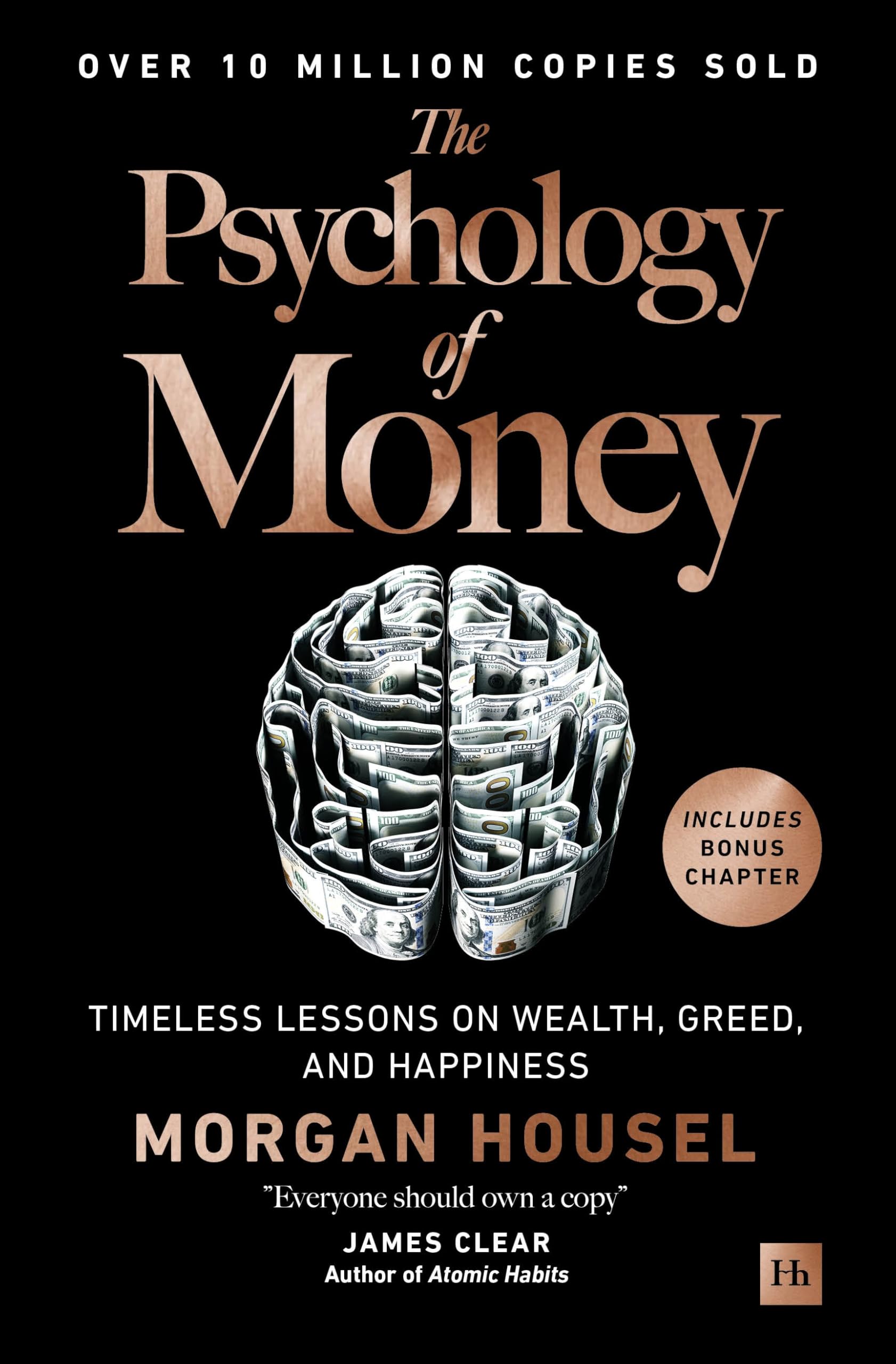
The Psychology of Money
For everyday investors and savers, this book shows why behaviour—not spreadsheets—decides your financial success, using 19 short, memorable stories that make better decisions easier than math-heavy guides.
Who this is for and what it solves If you want to get less anxious about money, make smarter long-term decisions, and understand why good choices often come down to behaviour rather than formulas, this book is written for you. Common search intents for personal finance and behavioural finance point to clear, actionable mental models and The Psychology of Money delivers those in short, readable essays rather than technical spreadsheets. ## What makes it worth it Morgan Housel breaks complex ideas into 19 short chapters that read like standalone essays, which makes the book unusually easy to return to and share. It leans on behavioural finance and real-world anecdotes instead of dense calculations, so it teaches durable thinking patterns investors and savers actually use; readers and retailers consistently rate it highly. The original paperback was published in 2020 (Harriman House) and the ~256-page length keeps the pace brisk without skimping on examples. ## Where it falls short If you want a step-by-step investing plan, detailed asset-allocation tables, or technical models, this isn't the book — Housel offers mental frameworks and stories rather than actionable portfolio blueprints. A few readers also find some anecdotes repetitive if they expect a tightly structured textbook. This is for most people who need better financial instincts and long-term perspective; if you need hands-on, technical investing instructions, look for a specialist investing manual instead.
£16.11
Buy nowBuy if
You want clearer financial instincts and practical mental models to stop second-guessing money choices and build long-term wealth.
Skip if
You need a hands-on investing manual with step-by-step asset allocation tables and technical guidance rather than narrative lessons.
What we found
Author
Morgan Housel
Page count
256 pages
Structure
19 short essays/chapters
Approach
Behavioural finance / psychology of money
Reader rating
~4.6 / 5 (Amazon/Goodreads)
Formats available
Paperback, eBook (Kindle)
Publication date
2020 (paperback)
Ready to buy?
£16.11