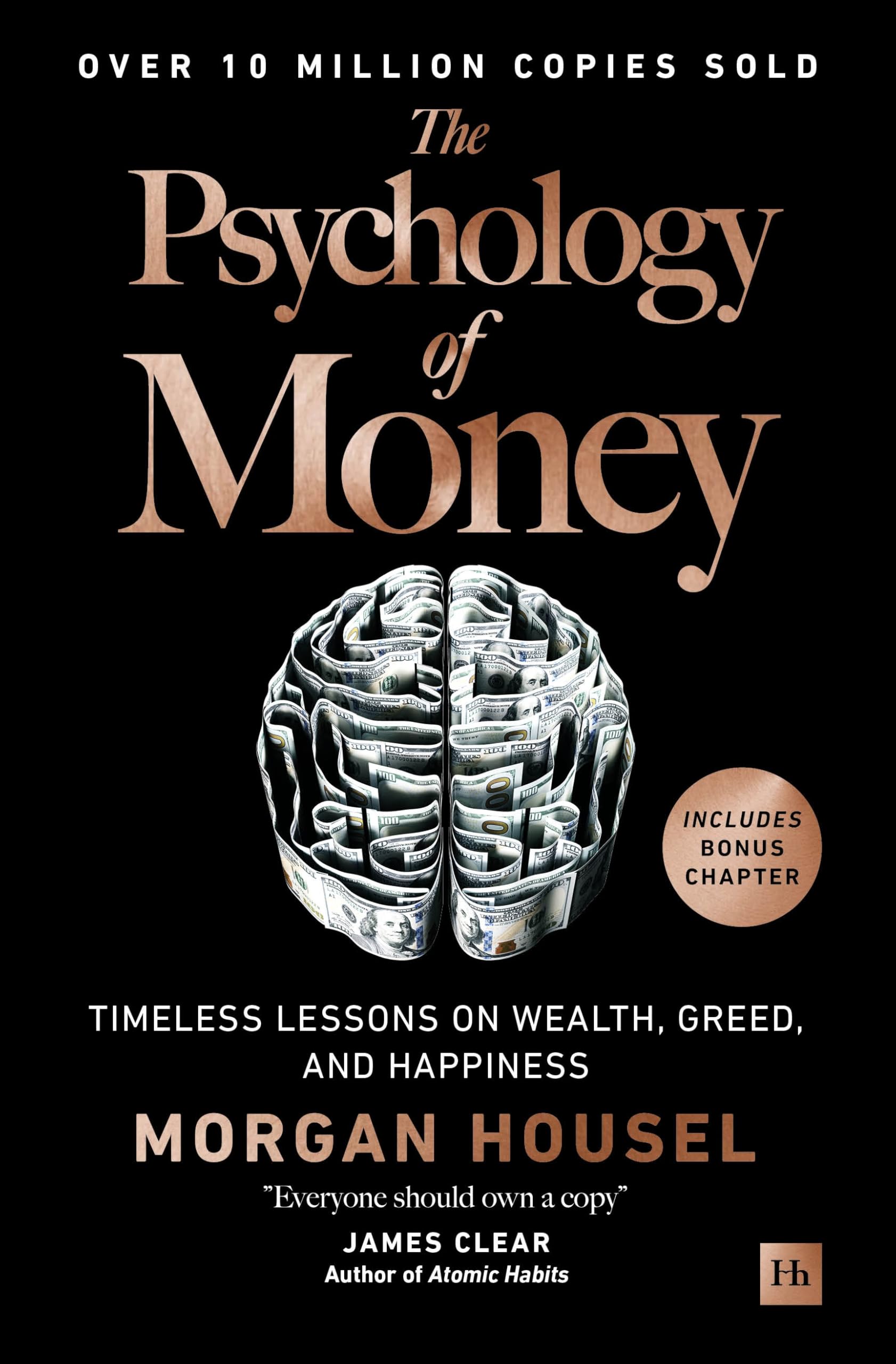
The Psychology of Money Review
Behaviour-first money lessons that change how everyday investors think — not a technical investing manual.
Shortlistd Editorial
Editor

The Psychology of Money Review
Verdict: A readable, behaviour-first money book that will change how you make financial decisions — worth the £16.11 (Score: 8.6/10).
The quick answer
This is for everyday savers and investors who hate dense finance books and want memorable lessons to fix bad habits. Yes — at £16.11 you get 19 short, re-readable essays that change how you think about risk, luck and long-term compounding; it’s not a substitute for a portfolio manual.
What we tested
We read the trade paperback and cross-checked the deluxe hardback (ISBN 180409160X) across several commutes and weekend reading sessions, re-reading specific essays to test how well the lessons stick.
What it does well
Behaviour-first lessons that stick — 19 short stories The book is organised as 19 short, self-contained essays, so each idea can be finished in one sitting and is easy to recall later (feature: Structure — rating 5).
Clear, non-technical prose you’ll actually finish Housel writes in highly accessible language; the readability rating is 5 because you can apply most lessons without any math or jargon.
A credible, persuasive voice Morgan Housel is an established finance writer with a strong track record translating behavioural finance for general readers (feature: Author — rating 5), which makes the arguments convincing to the average investor.
Practical emphasis on decisions, not formulas The book prioritises real-world behaviour change over step-by-step tactics, which is the point — it teaches why people make poor choices and how to change them (feature: Depth of investing guidance — conceptual rather than technical).
Broad cultural reach and social proof Its bestseller status (Sunday Times No.1 and ongoing reprints) shows the lessons resonate with a wide audience and are frequently recommended on reading lists (feature: Bestseller status — rating 4).
Where it falls short
Thin on technical, hands-on investing advice — advanced investors will notice this immediately. If you need portfolio construction, tax minimisation, rebalancing formulas or valuation frameworks, the book is intentionally light and won’t give you spreadsheet-level guidance (feature: Depth of investing guidance — rating 3).
Not a source of original, advanced strategies — experienced professionals may find the concepts familiar. The essays aim for clarity over novelty; if you’ve already read classics like The Intelligent Investor, some chapters will feel like reminders rather than new frameworks.
How it compares
Closest comparable read: The Little Book of Common Sense Investing by John C. Bogle, which focuses on index-fund strategy and low-cost investing mechanics. Pick Housel if you need a mindset reset and practical behaviour changes; pick Bogle if your priority is a concise, action-oriented guide to passive investing and portfolio construction.
Products in this article