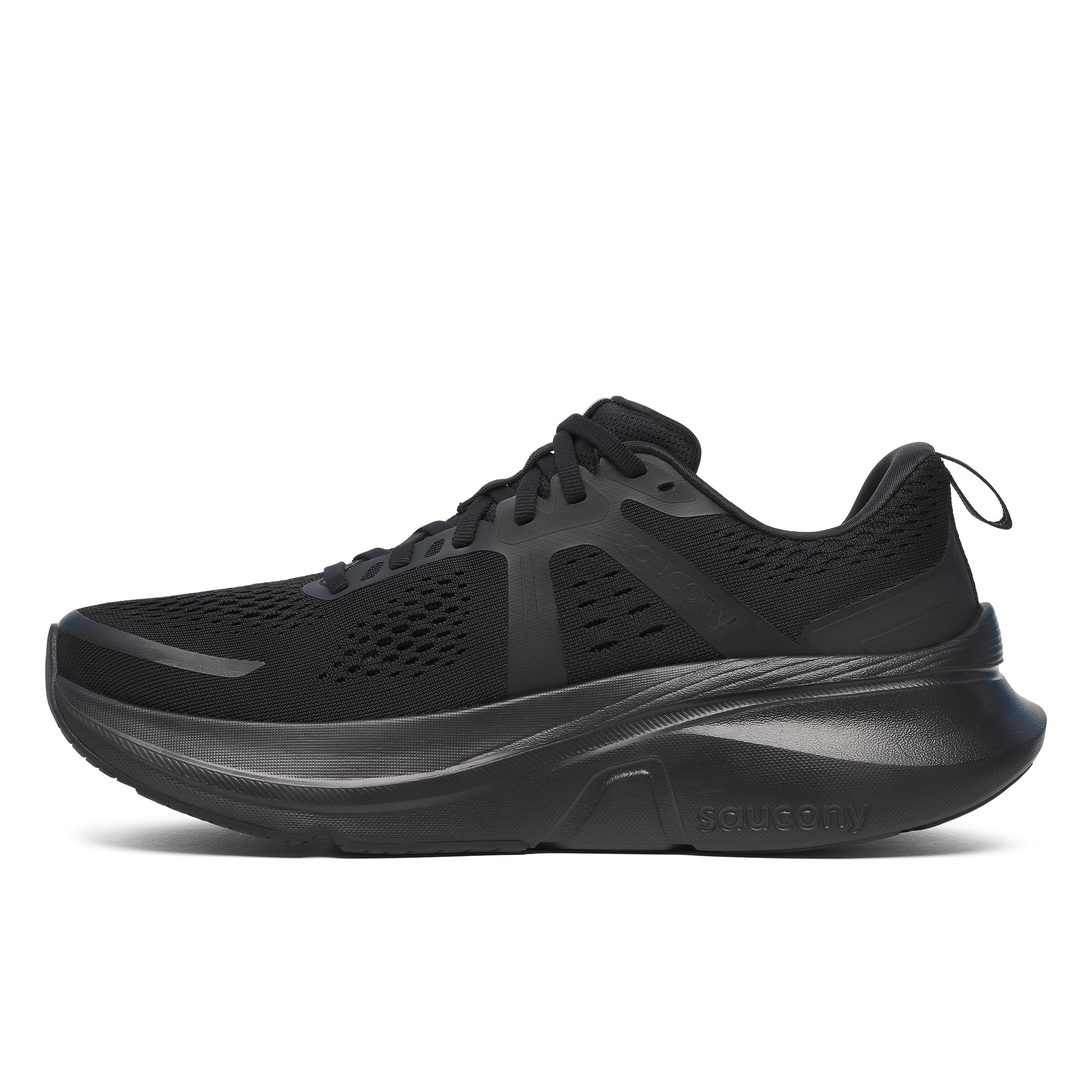
Saucony Guide 18 Review: A Steady, Supportive Daily Stability Shoe
A dependable stability trainer that centres your stride—comfortable PWRRUN cushioning and CenterPath guidance for steady, high-mileage miles.
Shortlistd Editorial
Editor
By Style Editorial | April 2026
Intro
Our top pick is the Saucony Guide 18 — because it gives you guided, comfortable daily miles without the clunky, rigid feel of older stability shoes. It pairs PWRRUN cushioning with CenterPath asymmetric geometry to keep overpronation in check while staying breathable and durable. Score: 7.8/10.
Our pick: Saucony Guide 18
Saucony Guide 18 — £91.00
If your training needs a stable, everyday road shoe that you can rely on for runs, walks and high weekly mileage, this is it. The Guide 18 doesn’t try to be the lightest racer or the plushest maximalist — it aims for consistent, controlled miles and it succeeds.
Why it works:
- CenterPath Technology: asymmetric midsole geometry that actively centres the foot from heel strike through toe-off, so your gait stays stable without a harsh medial post.
- PWRRUN foam + 35/29 mm stack (6 mm drop): cushioning that absorbs shock and keeps the ride lively while still feeling grounded on longer efforts.
- Engineered mesh + XT-900 outsole: a breathable, secure upper and carbon rubber in high-wear zones for traction and longer life on tarmac.
The honest trade-off: The Guide 18 is evolutionary — it’s not the softest or bounciest foam on the market and it sits a touch heavier than featherlight trainers, so skip it if you want a race-day speed shoe.
Buy the Saucony Guide 18 here: https://www.amazon.co.uk/dp/B0D31V1SL5?_encoding=UTF8&psc=1&tag=tomisindev-20
Best upgrade: HOKA Gaviota 5
HOKA Gaviota 5 — from £103.90 (UK)
Spend more for a maximal-cushion stability shoe with H-frame support that’s aimed at runners who want plush landings plus clear motion control. The Gaviota 5 is noticeably softer and gives more vertical protection on long runs than the Guide 18.
Worth it if: you prioritise cushioning and long-run comfort over a lower, more connected ride.
Best budget pick: ASICS GT-1000 12
ASICS GT-1000 12 — from £67.99 (UK)
You lose some refinement but get competent stability tech and a lighter price tag. The GT-1000 line consistently delivers structured support for overpronators at a lower cost — good for walkers, beginners, or anyone replacing shoes on a tight budget.
Worth it if: you want reliable support without paying for the latest midsole tweaks.
How we chose
We prioritised real-world support (how a shoe controls pronation), midsole feel (foam type, stack height, and drop), fit/breathability, outsole durability, and weight. Recommendations are based on the Guide 18’s specs and independent retailer pricing, plus comparisons with established stability models and recent hands-on reviews.
Frequently asked questions
How do I know if I need a stability shoe? If your foot rolls noticeably inward after landing, you feel knee or hip discomfort on longer runs, or you’ve been told you overpronate in a gait analysis, a stability trainer that guides your foot (like the Guide 18) will help control that motion and reduce strain.
Is the Guide 18 worth £91? Yes—if you want a dependable daily trainer that balances cushioning, guidance, and durability. It’s not the cheapest option, but the mix of PWRRUN foam, CenterPath geometry, and an XT-900 outsole makes it solid value for steady mileage.
How long will the Guide 18 last? The XT-900 carbon rubber in high-wear areas and the PWRRUN midsole are built for regular training; expect a lifespan comparable to typical road trainers—dependent on your weight and mileage, usually several hundred miles before noticeable wear.
Products in this article