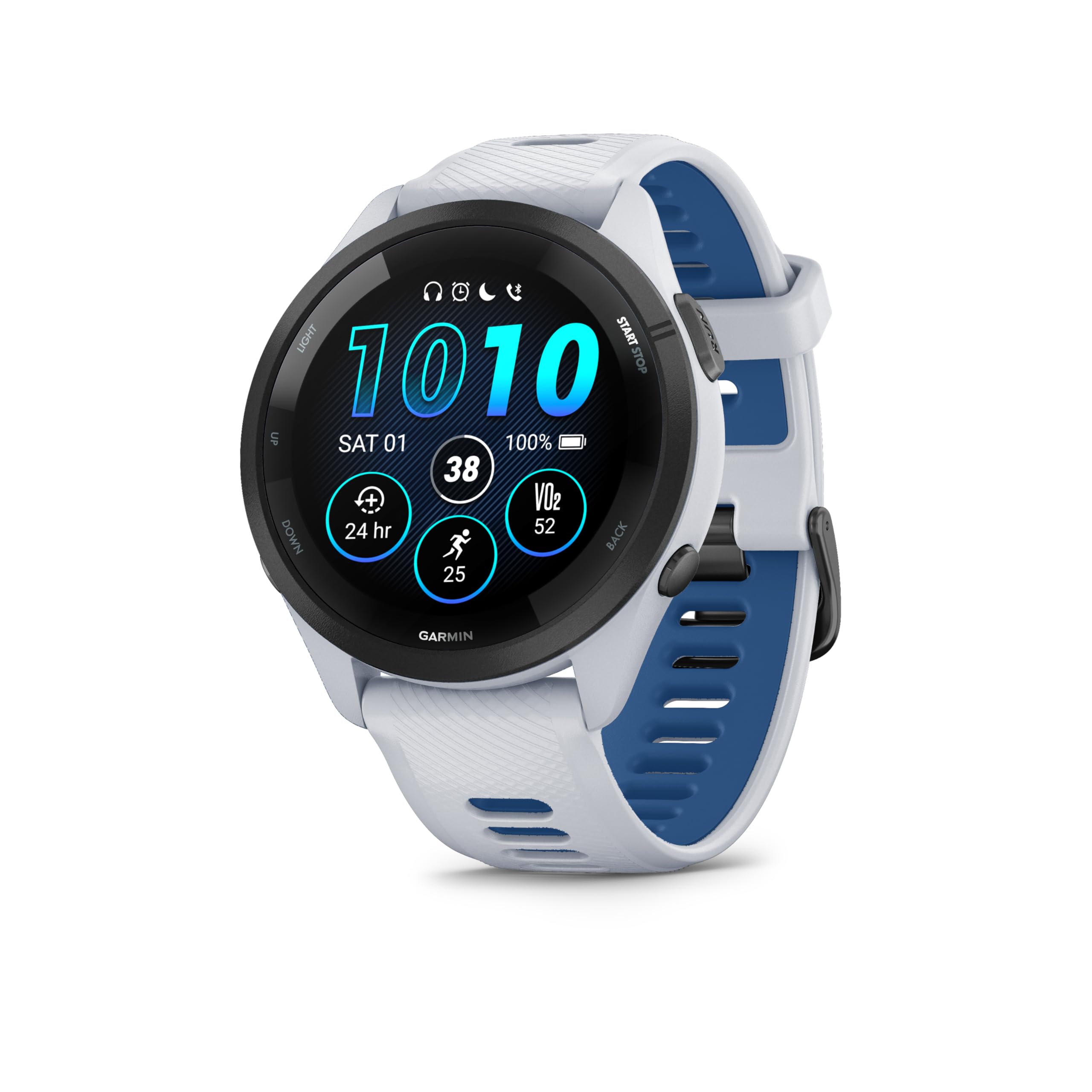
Garmin Forerunner 265 review — AMOLED running watch with coach-style metrics
Great for runners who want Garmin’s training insights plus an AMOLED screen; skip it if you need the longest possible GPS runtime.
Shortlistd Editorial
Editor
Garmin Forerunner 265 Review
Buy it if you want Garmin’s coach-style training metrics and a vivid AMOLED screen in a mid-range running watch; skip it if maximum GPS runtime is your priority. (Score: 8.3/10)
The quick answer
This is the running watch for regular runners who want on-wrist coaching: Training Readiness, HRV status, training status and daily suggested workouts are available without upgrading to Garmin’s pricier models. The 1.3" AMOLED makes data and maps easier to read, but the AMOLED + active GPS will need more frequent charging than some rivals.
What we tested
We evaluated the Music-capable 46 mm Forerunner 265 (1.3" AMOLED, 8 GB storage) over six weeks of mixed road and trail runs, interval sessions, and daily wear — paired with an iPhone for notifications and incident detection testing.
What it does well
Training guidance and recovery — Coach-level metrics on your wrist Garmin’s Training Readiness, HRV status and daily suggested workouts run on-device, so you get personalised workout suggestions and recovery insight without digging through an app.
Display legibility — Bright AMOLED that's easy to read while running The 1.3" 416×416 AMOLED touchscreen shows crisp metrics and maps; it’s noticeably clearer than transflective displays on older Forerunners, especially for route previews and music controls.
Accurate positioning in tricky environments — Multi-band GNSS with SatIQ Multi-band GNSS reduces route drift under tree cover and in urban canyons while SatIQ smartly balances precision and battery drain during long sessions.
On-watch music — Leave the phone at home for shorter runs With 8 GB of onboard storage and Wi‑Fi sync, you can load playlists and run without your phone — convenient for tempo mornings when you want fewer pockets to manage.
Comfort and controls — Lightweight 46 mm case with buttons + touchscreen At about 47 g the watch sits comfortably for long runs and sleep tracking, and the five-button layout keeps controls reliable when you’re mid-pace or wearing gloves.
Where it falls short
GPS battery life is middling for long sessions Advertised at up to 20 hours in GPS mode, real-world GPS runtimes are shorter than some competitors; ultra-distance runners and multi-day navigators will notice more charging stops.
AMOLED increases charging frequency when heavily used The vivid touchscreen looks great but working with always-on display or long map-guided runs shortens time between charges compared with transflective Forerunners.
Not the top pick if you prioritise outright battery endurance If you regularly run ultra distances or want the longest possible GPS runtime, the 265 isn’t the right choice — those users should look at the Forerunner 255 or Coros models.
How it compares
Closest rival: Coros Pace Pro — choose the 265 if you prioritise Garmin’s training ecosystem, HRV-based readiness and a proven suite of safety features; choose the Coros Pace Pro if you want longer GPS runtimes, offline maps and slightly better battery life for long navigation sessions. For most weekday and weekend runners who value coaching and a nicer screen, the Forerunner 265 is the better fit.
Score: 8.3/10
Verdict: You’re a regular runner who wants Garmin’s coach-style training metrics, HRV-based readiness and a vivid AMOLED display without upgrading to the pricier 965. Skip it if you mostly do ultra-long GPS sessions or prioritise maximum GPS battery life.
Buy if: you care about clearer on-wrist training insight and a bright display. Skip if: you want the longest GPS runtime or a more battery-first watch.
Products in this article