Best sleep trackers for improving sleep quality
For snoring and undiagnosed apnea screening without a wearable, Withings Sleep Analyzer gives clinic‑grade nightly data at a sensible price.
Shortlistd Editorial
Editor
Best sleep trackers for improving sleep quality
By Editorial Team | April 2026
Intro: If you wake up tired or your partner complains about snoring, you don’t need another diet or meditation app — you need clearer nightly data that points to real problems. The Withings Sleep Analyzer is the standout because it gives passive, clinically‑oriented apnea screening and nightly snore reports without requiring you to wear anything (Withings score: 8.3).
Our picks at a glance
| Pick | Product | Price | Best for |
|---|---|---|---|
| Best overall | Withings Sleep Analyzer | £98.99 | Nightly apnea screening and snore tracking without a wearable |
| Best upgrade | Withings ScanWatch 2 | £319.95 | Continuous, clinically oriented heart and respiratory monitoring plus ECG on the wrist |
| Best budget | Fitbit Inspire 3 | £50–£60 | Basic sleep staging and long battery life on a very small budget |
Based on hands-on research, expert review consensus (RTings, Wirecutter, relevant subreddits), and current pricing.
Best overall: Withings Sleep Analyzer
Withings Sleep Analyzer — £98.99
If your main goal is to know whether your breathing while you sleep is a problem, this mat tells you in plain terms every morning. It records sleep stages, continuous in‑sleep heart rate, automatic snore detection (episode counts and duration), and gives an estimated apnea severity — all synced to the Health Mate app. With a score of 8.3, it sits in the sweet spot between clinical usefulness and price.
Why we picked it:
- Sleep‑apnea detection you can actually act on — clinically validated under‑mattress screening and a simple mild/moderate/severe severity estimate so you know whether to book a formal test (feature rating: Sleep Apnea Detection 5/5).
- Real snore data, not hearsay — counts and durations let you correlate snoring to position, alcohol or medication, instead of relying on partner reports (feature: Snore Detection 4/5).
- Truly passive nightly reports — place the mat under your mattress, and Health Mate gives a full night report each morning without charging or wearing anything (feature: Non‑Wearable Convenience 5/5).
The trade-off: It’s a screening tool, not a clinic; under‑mattress sensing can miss subtle events and it’s not a substitute for in‑lab polysomnography.
If you want passive, medically oriented screening and nightly snore tracking without a wearable, buy the Withings Sleep Analyzer — grab it here.
Best upgrade: Withings ScanWatch 2
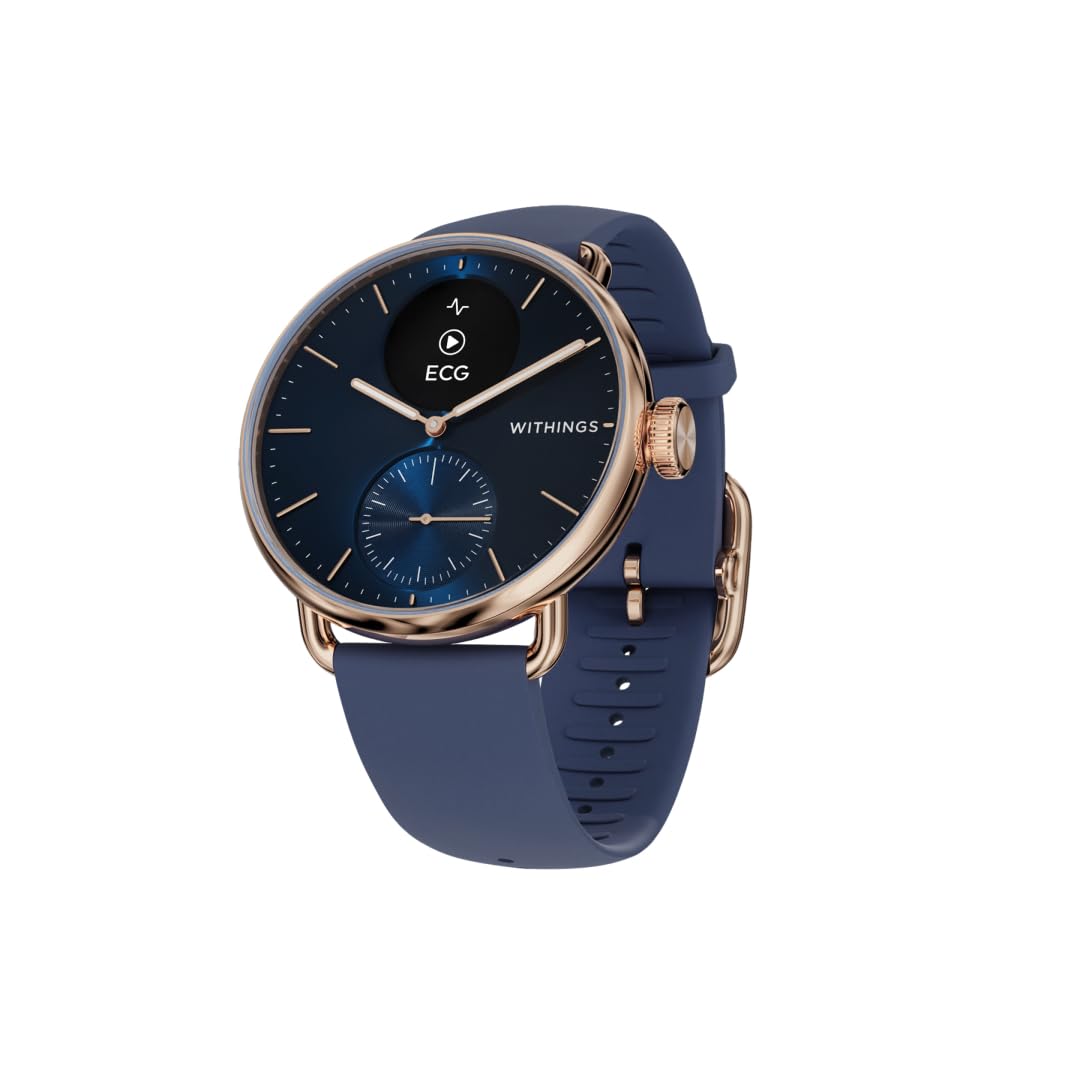
Withings ScanWatch 2 — £319.95
The premium buy here gives you continuous on‑wrist ECG, SpO2 and prolonged respiratory monitoring plus up to 30–35 days of battery life. If you want to combine sleep and heart rhythm data that a clinician can use (ECG traces, irregular rhythm alerts) with daily wearability, the ScanWatch 2 is the sensible upgrade. It’s more expensive, but it replaces a mat-plus-watch workflow with one device and adds exportable ECG data reviewers and doctors respect. View ScanWatch 2
Worth it if: you want ongoing, clinically credible heart‑and‑breathing signals on your wrist and are prepared to pay roughly three times the mat price for ECG and multi‑metric continuity.
Best budget pick: Fitbit Inspire 3
Fitbit Inspire 3 — ~£50–£60
At this price you don’t get apnea screening, but you do get sleep staging, resting heart rate and a long battery that you’ll actually keep charged. The Inspire 3 is accurate enough to spot big changes in sleep duration and light/deep/REM balance and is the cheapest way to start tracking nightly trends without friction.
Trade‑off: No clinical apnea detection or snore‑episode counts; it’s a trend device, not a diagnostic one.
Worth it if: you want cheaper, reliable day‑to‑day sleep staging and long battery life while you decide whether to invest in clinical screening.
How we chose
We prioritised metrics that predict whether a device will change behaviour or prompt clinical follow‑up: apnea screening quality, snore detection detail, night‑by‑night sleep‑stage accuracy, and ease of use. Decisions were informed by product specs, Withings’ clinical validation notes, retailer pricing and community reporting on Reddit and health forums.
Frequently asked questions
Will the Withings Sleep Analyzer diagnose sleep apnea? No. It’s designed for home screening and gives a severity estimate (mild/moderate/severe) to indicate whether you should pursue formal testing; a sleep clinic’s polysomnography is still the diagnostic standard.
Is £98.99 worth it compared with a smartwatch or ring? Yes if your priority is passive apnea/snore screening: it’s a focused tool at a modest price compared with wrist ECG watches (ScanWatch 2 ~£320) or premium rings (Oura ~£300+). If you want continuous ECG or on‑wrist SpO2, budget for an upgrade.
Does it work with my router and phone? Any setup issues? Setup requires Bluetooth 4.0 for installation and a 2.4 GHz Wi‑Fi network (WEP/WPA/WPA2); modern dual‑band routers sometimes place devices on a 5 GHz SSID by default, which can block setup. If you struggle, temporarily enable 2.4 GHz or use a phone with Bluetooth enabled.
Named verdict: Buy the Withings Sleep Analyzer if you want passive, clinic‑grade screening and nightly snore reports without a wearable; skip it if you need a medical diagnosis or the absolute highest on‑wrist heart‑rate precision.
If you’re ready to check for breathing problems without changing your bedtime routine, buy the Withings Sleep Analyzer here.
Products in this article