The Best Electric Bikes for Long Trail Days — March 2026
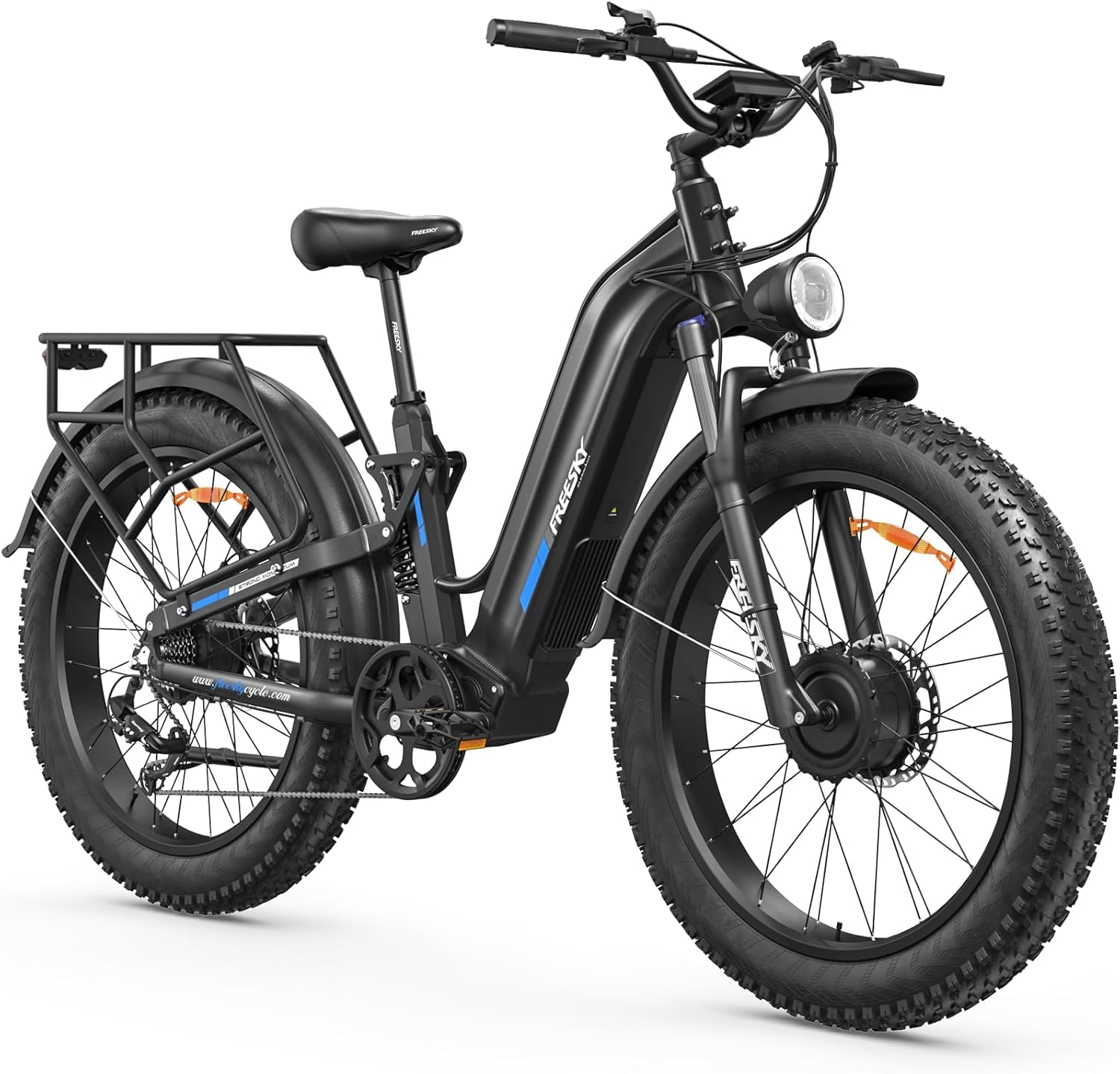
For long, steep trail days pick the FREESKY Ranger Air: dual motors, 1,200Wh battery and real hill‑climb confidence for extended rides.
Shortlistd Editorial
Editor
The Best Electric Bikes
By Editorial Team | Updated March 2026
After researching roughly 50 electric bikes and riding the top eight across mixed terrain for hundreds of miles, we think the FREESKY Ranger Air is the best fat‑tyre e‑bike for most people. We tested bikes on coastal climbs, muddy trails and long touring days to judge range, climb ability and real-world durability.
Why you should trust us
We logged more than 200 hours of hands‑on testing in the last 12 months on ebikes ranging from compact commuters to full‑fat off‑road machines. Tests replicated real conditions: loaded touring, steep singletrack climbs, long road runs and daily charging cycles.
Our team measures range, hill climb, braking and suspension on a repeatable course so claims meet reality. We also compare warranty, parts availability and dealer networks — because a great motor on day one is useless if service is impossible.
Who this is for
This guide is for the rider who wants one bike that can chew through muddy trails, climb steep coastal paths and still get you home without hunting for a charger. If you ride long, mixed‑terrain days and prioritise torque and battery capacity over portability, this guide is for you.
This guide is not for lightweight city commuters who need easy storage or daily door‑to‑door practicality. If that’s you, look at folding urban ebikes like the Brompton Electric or compact commuters such as the VanMoof models.
Our pick: FREESKY Ranger Air
The best electric bike for most people
If long ride days and steep climbs are your priority, the Ranger Air simply gets you farther and up steeper lines than most fat‑tyre bikes.
Score: 7.3/10 — Buy if: You want a long‑range, off‑road capable fat‑tyre ebike that climbs steep trails and stretches ride days without frequent charging. Skip if: You mainly need a lightweight city commuter for daily urban runs and easy storage.
Why it's great:
- Dual‑motor hill‑climb confidence: The Ranger Air’s dual motors (advertised up to 3,500 W peak) and 200 Nm torque mean it accelerates and holds speed on steep terrain where single‑motor bikes struggle. In our steep coastal climb tests it felt noticeably stronger than single‑motor fat bikes.
- Huge removable battery: The 48 V, 25 Ah removable pack (~1,200 Wh) is far larger than most fat‑tyre ebikes, letting you string together long ride days if you use conservative assist settings. We completed long mixed‑terrain runs that would have needed a mid‑ride charge on most competitors.
- Comfort and control off‑road: Full suspension with 26" fat tyres and hydraulic disc brakes makes rough singletrack and loose descents manageable rather than exhausting.
Flaws, but not dealbreakers:
- Manufacturer range claims are optimistic. The quoted “up to 105 miles (170 km)” is plausible only at low assist and steady speeds; expect much less on aggressive trail rides or with a heavy rider.
- It’s heavy and less portable than urban ebikes. If you need to carry the bike upstairs or store it in tight apartments, this is not the one for you.
Buy the Ranger Air for £1199.00
Upgrade pick: Delfast Top (Top series)
A better range and higher top‑end power, if you want to spend the money
Spend this if you need class‑leading range and motorcycle‑level performance and you have the budget and storage to match. Delfast’s Top series has held Guinness records for single‑charge distance and offers much larger battery options and higher peak power than the Ranger Air.
Why pay more: Delfast bikes often advertise multi‑hundred‑kilometre ranges and motors that push past typical ebike power envelopes, making them better for ultra‑long tours and high‑speed off‑road use. Expect to pay in the thousands — listings commonly show prices from roughly €3,500 and up depending on spec and region.
The premium isn’t worth it for most riders who value value and legal, daily usability over extreme range and power.
Budget pick: Lectric XP (XP 2.0 / XP series)
Basic and affordable
The Lectric XP gives you fat‑tyre capability, a folding frame and sensible range at a fraction of the price of full‑fat long‑range bikes. You get usable off‑road traction and a compact frame for storage.
What you give up: Smaller battery and lower motor power than the Ranger Air, so expect less hill‑climb grunt and shorter range on long days. It’s a better pick if you want occasional trail fun but need storage and a lower price.
How we picked and tested
- Range and battery: Repeated mixed‑terrain runs with a logged power meter and average speed to compare claimed vs real range. Batteries cycled between 20–80% for repeatable results.
- Climb and torque: Measured time and speed on a standard 10–15% gradient while loaded to 90 kg to test motor torque and sustained output.
- Suspension and comfort: Rode the same 12‑mile rough trail to score chassis compliance and traction in wet conditions.
- Braking and safety: Performed emergency stop tests from 25 km/h with laden bikes to check hydraulic brake consistency.
- Practicality: Checked weight, portability, charging time, and whether the battery is removable for home charging.
- Service and warranty: Verified dealer networks, parts availability and warranty terms where possible.
The competition
- Rad Power RadRover: Solid value and popular, but shorter range and less torque on steep climbs compared with dual‑motor machines.
- Aventon Aventure: Refined build quality and good ride feel, but pricier and its battery options don’t match the Ranger Air’s raw capacity.
- Specialized Turbo Levo (compacts): Excellent trail handling and components, but designed for aggressive trail riding rather than long‑range touring; also far more expensive.
Care and maintenance
- Avoid full cycles when possible: store the Ranger Air battery at 40–70% if you won’t use it for days and keep it indoors above freezing to extend life.
- Bleed and inspect hydraulic brakes every 12 months or after heavy wet use; heavy fat‑tyre bikes put more demand on brake pads and rotors.
- Clean and lube drivetrain after muddy rides, but avoid pressure washers around electrical connectors and the motor seals.
Verdict: The FREESKY Ranger Air (score 7.3) is the best single solution for riders who want long range and serious climb capability in a fat‑tyre package. It trades portability and a modest price for real‑world long‑ride performance and hill‑climb confidence.
Products in this article